
Transcendence in an Exhausted Age: Why Michael Jackson Is More Relevant Than Ever
Kemi Amusan
Charminine · 2026
This Is Not Nostalgia
Something happened when the Michael Jackson biopic hit screens in April 2026.
Something measurable. Something undeniable. And yet, something the charts themselves could not explain.
A generation raised on streaming algorithms, on ambient music engineered for focus and mood suddenly, collectively, choosing something else.
It is more recognition than anything else. The soul recognizing a frequency it has been starving for. And now the signals point at Michael Jackson with the urgency of someone pointing at water in a desert.
The question worth asking is why does his music feel more necessary now than it did in 2009, when he died? Why does it land harder in 2026 than it did in 1982, when Thriller broke every record in existence? What has changed in us?
What the Soul Does in an Existential Age
We are living through something that does not yet have a clean name. maybe a form of civilizational vertigo. The feeling that the structures we inherited: economic, political, social, spiritual are not holding. That the floor is not where we thought it was. That the story we were told about progress and safety and the future may have been, at best, incomplete.
It is the dominant emotional frequency of this decade, humming beneath every news cycle, every conversation, every midnight scroll. People are exhausted. Not tired, exhausted. The kind of exhausted that comes from holding yourself together across years of uncertainty with no clear endpoint.
And when human beings are that exhausted, something shifts in what they reach for. The ironic armor that was okay during the privileged discomfort of stability no longer holds. When you take away safety, irony has nowhere to stand. It is replaced with earnestness. A raw, almost embarrassing kind of earnestness that wills us to mean something, to feel something, to reach for something beyond the self. And not just in a way religion demands it.
Rather, in a form that has people asking questions they had learned to suppress. What is this life for? What holds when everything shifts? What does it mean to be human in a time that feels inhuman? We don’t ask these questions in comfort. No, we don’t. We ask them at the threshold. Interestingly, we sometimes look to the media to provide answers, and the industry has not really been providing that. And why should they?
Music Was Always a Ritual Technology
Well, maybe because music is diagnostic. What a culture listens to in its most private, most unguarded moments tells you what it is feeling beneath the performance of okayness.
See, every civilization, across every continent, across every era of human history, used music to do the same essential things: to move the community from one state of being to another.
It is the oldest technology we have for moving consciousness. Before language was fully formed, before writing, before cities, there was rhythm. There was the human voice. There was the body that knew how to synchronize with other bodies through sound.
It was used to mark the sacred. To process grief too large for words. To synchronize the nervous systems of a group into collective coherence. To reach what ordinary language could not reach and bring something back from that place.
The drum circle before the hunt. The dirge at the grave. The hymn that lifts the congregation out of their individual bodies and into something shared. The work song that makes unbearable labour survivable. The lullaby that tells a child: you are held, you are safe, the world is not as frightening as it seems. Music has always done this. In every culture. Without exception.
And you can see it happening again. Not in temples or sacred grounds, but in the middle of cities. Strangers gathering in the streets of London, singing in unison, voices rising together without rehearsal, without instruction, as if remembering something older than themselves. No stage. No performer. Just a shared need to feel, carried by songs that everyone somehow already knows. Christians, Muslims, Jews, people who would normally remain within the boundaries of their own worlds, standing side by side with no need to explain who they are. Black, white, Asian, distinctions that usually structure interaction dissolving, if only for a moment, into something simpler. Almost like religion dissolving in real time, the walls that once separated people giving way to a sense of oneness, to the very kind of love the masters of those traditions themselves taught at their most aligned. Just human beings, finding resonance in the same sound.
The music industry captured this original function, monetized it, and standardized it into product. And in doing so, it gradually, almost imperceptibly, hollowed out the very thing that made music irreplaceable. Almost like capitalism did all forms of art. It kept the aesthetic and discarded the altar. It kept the sound and removed the purpose.
Arguably now, we have an era of music that is, by many technical measures, extraordinary: better produced, more sonically complex, more globally distributed than anything that came before. Yet, somehow may be largely unable to move the soul. Oh, it can perfectly soundtrack a moment. It just rarely transforms it.
Of course, that often happens when we optimize for consumption. We inevitably sacrifice consecration.
And what this culture is reaching for, in 2026, is something that acknowledges the size of the feeling without flinching from it. Something that holds space for grief and hope in the same breath.
Michael Jackson made that music for thirty years. And our generation seem only now, collectively, ready to receive it at full volume.
Michael And The Assignment
Beneath the surface of each song was something building a vessel for something larger than itself, rather than merely making entertainment.
At the height of his powers, he did not sing about love in the conventional pop sense that we have today. He sang about the planet. He sang about children dying. He sang about the mirror, the confrontation each person must have with their own capacity for change. He sang about being held by something he could not name, something beyond the human, in the moments when the human was not enough.
Earth Song. Thirty years before climate anxiety became the ambient dread of a generation, he stood in a field of destruction and asked: what have we done to the world? Not rhetorically. With the anguish of someone who genuinely needed an answer.
Heal the World. A song so earnest it was mocked for decades by people who had confused sophistication with distance. Who had decided that caring this openly was naive. Well, guess who the jokes just landed on. The world needed healing and the man who said so plainly was right.
Will You Be There. Perhaps the most nakedly spiritual piece of music to reach number one in the modern era: a man, stripped of everything, asking: is there a force in this universe that holds me? Is there something that will catch me when I fall? Not as metaphor. As actual, urgent, personal question, thus creating creating the conditions with everything he had in his musical genius, for other people to feel something they did not have language for.
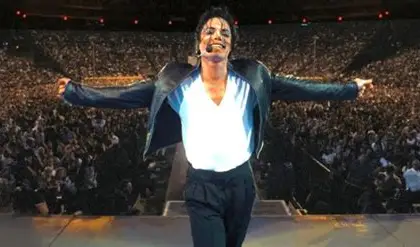
The screaming crowds at his concert were congregants responding to a ritual. The collective release that happened in those arenas, the weeping, the fainting, the transcendent joy was the same phenomenon that happened in revival tents, in Sufi circles, in the drum ceremonies of West Africa. The technology was different. The function was identical.
And because the soul needs no translation, the frequency of his music matched something in the human animal that exists beneath culture, language, or identities we construct to navigate the world. Little wonder he moved across languages and cultures with an ease that no amount of marketing could manufacture.
He was operating at the level of the species. And the species, in 2026, is finally tuning to the same frequency.
The Gap the Industry Cannot Fill
As was stated earlier, while the current music is extraordinary in its craft, it does not know how to build soul level altars. It knows how to build products. But they lack souls. A product is designed to be consumed and replaced. An altar is designed to hold what cannot be consumed such as grief, longing, wonder, the inexplicable sense that this life means something beyond what we can measure. That wants permission to feel at the scale of what is happening.
And right now, the soul does not want maintenance. It wants to be cracked open. And it will find whatever music is capable of doing that, regardless of what the algorithm recommends.
And what is happening with Michael Jackson’s music is exactly that. A referendum. Hundreds of millions of people, most of them young, voting with the most private currency they have, their attention, for music that takes the full weight of human experience seriously. For music that does not look away from the size of what it means to be alive in this body, on this earth, in this moment.
And sometimes, that vote does not remain private. It spills out into the open. Into streets and public squares, where people who have never met find themselves singing the same songs, their voices aligning without effort, as if pulled by the same invisible thread. What begins in earphones becomes something shared, something embodied, something impossible to ignore. For a moment, the structures that usually separate people, religion, race, language, identity, loosen their grip. The walls recede. And what remains is not difference, but recognition. Not category, but experience. Humanity, encountering itself through sound.
That is why, everywhere, in ways both private and unseen, it begins. In a pair of earphones on a bus in Lagos or a kitchen in São Paulo or a bedroom in Seoul, twenty-six-year-olds and countless others are playing Will You Be There for the first time, and feeling, without quite knowing why, that they have been found. But more than that, they feel something open in them, something they have been needing without having the language for it. A sense of being held. Of meaning returning. Of connection that does not depend on identity or circumstance. And once that feeling is touched, even briefly, it is no longer the music alone they are drawn to, but what the music makes possible within them. It is from these quiet awakenings, repeated across millions of lives at once, that something larger begins to form. The same longing, surfacing again and again, until it gathers, takes shape, and spills into the open. Into voices. Into crowds. Into something shared. Convergence. Humanity, reaching for the same transcendental experience.
✦
Charminine · 2026