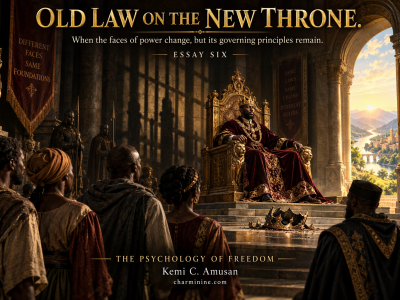
OLD LAW ON THE NEW THRONE depicts a grand medieval throne room rendered in a cinematic Renaissance-inspired style. At the center-right, a newly crowned Black ruler sits with dignity upon an imposing golden throne, dressed in deep burgundy velvet adorned with antique gold embroidery and wearing an ornate crown. At the foot of the throne lies a shattered crown, symbolizing the fallen order. In the foreground, Black men and women from different walks of life stand facing the ruler, emphasizing the relationship between political power and those who live under it. Behind the throne, elongated shadows stretch across ancient stone walls, forming prison-bar patterns that suggest the persistence of oppressive structures despite a change in leadership. To the far right, a majestic archway opens onto a bright, sunlit landscape, representing the possibility of a different social order. Rich tones of antique gold, burgundy, bronze, charcoal, and warm ivory create a regal yet unsettling atmosphere. The cover includes the title OLD LAW ON THE NEW THRONE, the subtitle “When the faces of power change, but its governing principles remain.”, ESSAY SIX, and the branding THE PSYCHOLOGY OF FREEDOM • Kemi C. Amusan • charminine.com.

The Psychology of Freedom Captivity, Conditioning, Healing and Power By Kemi C. Amusan Charminine.com ESSAY SIX OLD LAW ON THE NEW THRONE

Liberation changes where a person stands without necessarily changing what they believe power is. The former servant may become the lord, the excluded may become the gatekeeper, and the once-oppressed may reproduce the very conditions they fought to escape. This essay examines the psychological inheritance of oppression, the wounds that survive success, and the danger of carrying old laws into new positions of authority. It argues that genuine liberation requires two disciplines: inner healing that changes how we understand and exercise power, and external structures that hold power accountable when personal insight fails. For freedom to endure, power must become an instrument of stewardship rather than a means of securing the helplessness of others.
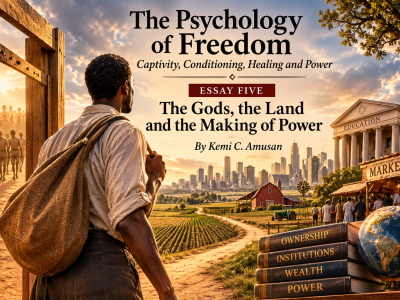

The Psychology of Freedom Captivity, Conditioning, Healing and Power By Kemi C. Amusan ESSAY FIVE The Gods, the Land and the Making of Power

      The Psychology of Freedom Captivity, Conditioning, Healing and Power By Kemi C. Amusan ESSAY FIVE The Gods, the Land and the Making of Power   Freedom can open a door, but it cannot rearrange the street beyond it. The land was divided before the newly freed arrived. … More The Psychology of Freedom Captivity, Conditioning, Healing and Power By Kemi C. Amusan ESSAY FIVE The Gods, the Land and the Making of Power »

The Psychology of Freedom By Kemi C. Amusan ESSAY THREE   The Garlic of Egypt: Deconditioning and the Loneliness of the Pioneer

ESSAY SERIES The Psychology of Freedom By Kemi C. Amusan Charminine.com ESSAY THREE   The Garlic of Egypt: Deconditioning and the Loneliness of the Pioneer   The Price of Refusing the Role Laws may be changed, institutions remade, and the distribution of resources altered, yet the mind can remain loyal … More The Psychology of Freedom By Kemi C. Amusan ESSAY THREE   The Garlic of Egypt: Deconditioning and the Loneliness of the Pioneer »

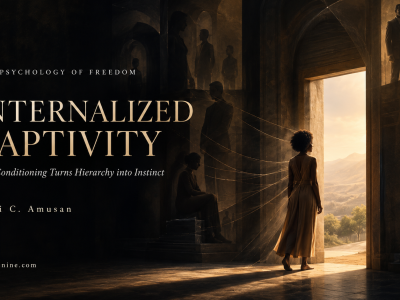
The Psychology of Freedom By Kemi C. Amusan ESSAY TWO Internalized Captivity

  ESSAY SERIES The Psychology of Freedom Captivity, Conditioning, Healing and Liberation By Kemi C. Amusan Charminine.com ESSAY TWO Internalized Captivity   From Repetition to Instinct What we meet repeatedly becomes easier to recognise, anticipate, and answer. Social life works the same way. A child who keeps seeing authority attached … More The Psychology of Freedom By Kemi C. Amusan ESSAY TWO Internalized Captivity »

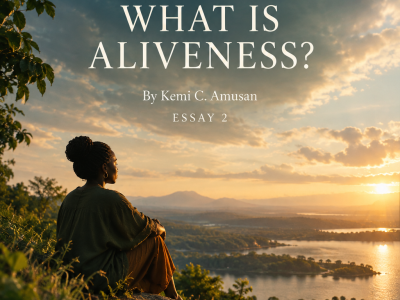
The Measure of Aliveness Kemi C. Amusan Essay 2 What Is Aliveness?

      The Measure of Aliveness   Kemi C. Amusan   Essay 2 What Is Aliveness?   Essay 1 ended with a question left deliberately open: what determines whether a person is simply existing inside a sequence of years, or actually participating in the life those years contain? We … More The Measure of Aliveness Kemi C. Amusan Essay 2 What Is Aliveness? »

Humans Beyond Function Redesigning Access to Life When Machines Do the Work Kemi C. Amusan Essay V The Age of Access

Industrial civilization became remarkably skilled at creating value. The next civilization may be judged by something different: how effectively it enables people to reach, use, and participate in the value civilization has already created. Access is not a philosophy of sameness or redistribution. It is a philosophy of possibility, concerned with the barriers that separate human potential from the conditions through which that potential can become useful.

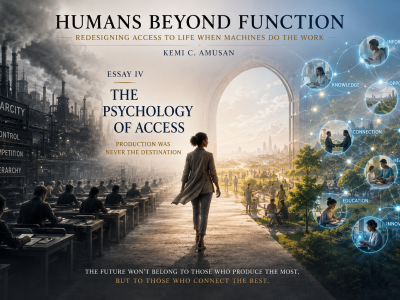
Editorial cover image for Humans Beyond Function: Redesigning Access to Life When Machines Do the Work, Essay IV, The Psychology of Access, by Kemi C. Amusan. A woman walks from a dark industrial landscape marked “Scarcity,” “Control,” “Competition,” and “Hierarchy” toward a bright, connected future representing information, knowledge, opportunity, connection, healthcare, education, and innovation. The image includes the phrase “Production Was Never the Destination.”

Humans Beyond Function Redesigning Access to Life When Machines Do the Work Kemi C. Amusan ESSAY IV The Psychology of Access

As machines become increasingly capable of producing what humanity needs, the central challenge of civilization may no longer be production—but access. The next great transformation will depend on how effectively we connect people to the knowledge, opportunities, institutions, technologies, and resources that already exist. This is not simply an economic transition. It is a psychological one: from a civilization shaped by scarcity, control, and accumulation toward one increasingly organized around connection, participation, and reduced friction.

Humans Beyond Function Redesigning Access to Life When Machines Do the Work By Kemi C. Amusan   Essay I The Zero Marginal Cost Society and the Broken Prediction The Shadow Side of Technological Democratization

  Humans Beyond Function Redesigning Access to Life When Machines Do the Work By Kemi C. Amusan   Essay I The Zero Marginal Cost Society and the Broken Prediction The Shadow Side of Technological Democratization Jeremy Rifkin thought he had seen the future. Writing in The Zero Marginal Cost Society … More Humans Beyond Function Redesigning Access to Life When Machines Do the Work By Kemi C. Amusan   Essay I The Zero Marginal Cost Society and the Broken Prediction The Shadow Side of Technological Democratization »

The Exhausted Civilization Why Modern Life Has Forgotten How Living Systems Work By Oluwakemi C. Amusan Chapter Four What the Symptoms Are Trying to Tell Us

The Exhausted Civilization Why Modern Life Has Forgotten How Living Systems Work By Oluwakemi C. Amusan   Chapter Four What the Symptoms Are Trying to Tell Us   Distortions are rarely visible in themselves. We do not wake up thinking about disrupted oscillation or fractured resonance. We experience something more … More The Exhausted Civilization Why Modern Life Has Forgotten How Living Systems Work By Oluwakemi C. Amusan Chapter Four What the Symptoms Are Trying to Tell Us »

Follow us on Social Media